You’ll commence on a profound spiritual journey to Kailash Parvat, revered across Hinduism, Buddhism, and Jainism as a sacred axis connecting heaven and earth. Move gently through sacred spaces, absorbing the calm prayers and vibrant offerings while preparing physically for the rugged trek and high altitudes. Dress modestly, respect local customs, and embrace the serene landscapes and supportive guides. As you venture closer, you’ll discover essential insights on permits, routes, and rituals that deepen your pilgrimage experience.
Key Takeaways
- Kailash Parvat is a sacred spiritual axis revered in Hinduism, Buddhism, and Jainism, symbolizing divine connection and enlightenment.
- The ideal pilgrimage season is from May to September for clear skies, mild weather, and vibrant natural surroundings.
- Pilgrims must obtain Tibet Travel Permit, Alien’s Travel Permit, Military Permit, and carry valid passports and visas.
- Physical and mental preparation includes cardio training, altitude acclimatization, mindfulness, hydration, and wearing layered, sun-protective clothing.
- Respect sacred site etiquette by dressing modestly, speaking softly, removing shoes before temples, and observing silence during rituals.
Why Is Kailash Parvat Sacred in Hinduism, Buddhism, and Jainism?
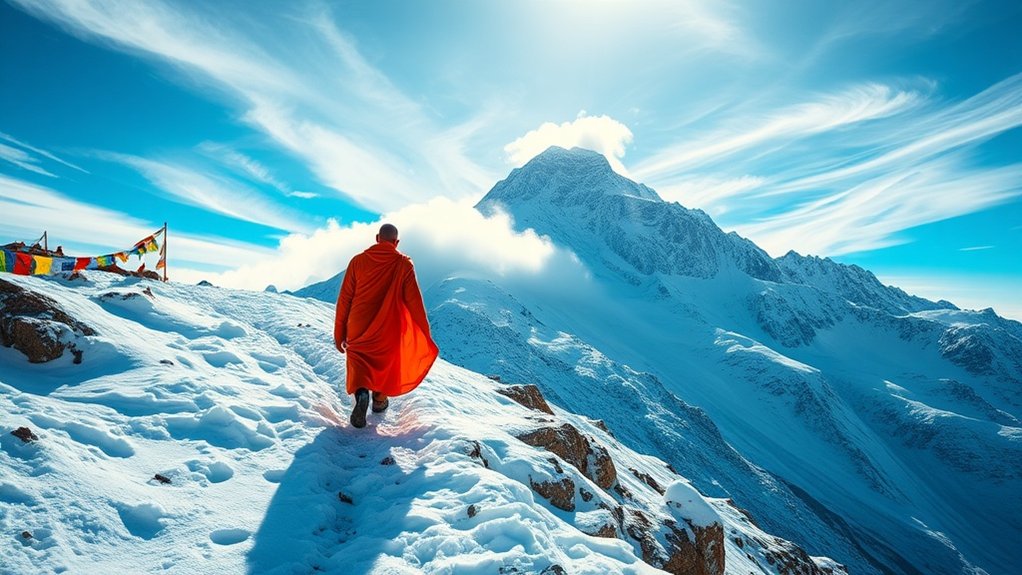
Three major religions—Hinduism, Buddhism, and Jainism—revere Kailash Parvat as a powerful spiritual axis connecting heaven and earth. When you stand before Kailash Parvat, you feel its sacred energy, a beacon drawing souls toward enlightenment. In Hinduism, it’s Lord Shiva’s abode, the cosmic center where creation and destruction meet. Buddhism sees Kailash Parvat as Mount Meru, the universe’s spiritual heart, where divine beings reside. Jainism honors it as the site where the first Tirthankara attained liberation, symbolizing ultimate freedom from suffering. As you immerse yourself in its presence, you grasp how Kailash Parvat transcends physical form, becoming a symbol of spiritual awakening. This mountain doesn’t just rise from the earth—it elevates your spirit, inviting you to connect with something eternal. Engaging with mindful meditation can deepen this connection, fostering clarity and self-awareness on your spiritual journey.
When Should You Plan Your Kailash Parvat Pilgrimage?
You’ll want to choose a time when the skies are clear, and the weather feels just right for the journey ahead. The peak pilgrimage seasons bring a vibrant energy, but also more travelers sharing the path with you. Planning your visit during these ideal months guarantees you experience Kailash Parvat’s sacred beauty at its most welcoming. Additionally, establishing a routine before your trip can enhance your focus and preparation, making the pilgrimage even more fulfilling.
Best Weather Conditions
Although the journey to Kailash Parvat is spiritually rewarding year-round, choosing the right weather can transform your pilgrimage from challenging to truly transcendent. You’ll want to avoid the harsh winters when biting cold and heavy snow block the paths, making travel perilous. Instead, plan your trek during late spring to early autumn, when the skies clear, and the sun bathes the sacred peaks in golden light. The crisp mountain air feels invigorating, and the trails become accessible, inviting you to walk with ease and reverence. Gentle breezes carry the scent of pine and wildflowers, deepening your connection with nature’s sacredness. By aligning your journey with these ideal weather conditions, you allow your spirit to soar freely, fully embracing the profound serenity Kailash offers.
Peak Pilgrimage Seasons
When the season aligns just right, your pilgrimage to Kailash Parvat becomes more than a journey—it turns into a deeply immersive spiritual experience. The best time to plan your trek is during the summer months, from May to September, when the weather is milder and the paths are accessible. During this window, the mountain reveals its serene beauty under clear skies, allowing you to connect deeply with its sacred energy. Avoid the harsh winter months, as heavy snowfall makes travel difficult and dangerous. Early summer bursts with vibrant flora, while late summer offers calm, crisp air perfect for reflection. By choosing these peak seasons, you guarantee your journey is safe, comfortable, and spiritually fulfilling, letting you fully embrace the majestic aura of Kailash Parvat.
What Permits and Documents Are Needed for the Kailash Pilgrimage?
How do you prepare the necessary permits and documents for the Kailash pilgrimage? First, you’ll need a Tibet Travel Permit, essential for entering the region, which your tour operator usually arranges. Alongside this, you must secure the Alien’s Travel Permit, required for areas around Kailash. Don’t forget the Military Permit; it’s vital for restricted border zones. Carry your valid passport, visa for China or Nepal, and multiple passport-sized photos. Make sure all documents are current and organized neatly. Reflect on how these permits symbolize more than just bureaucracy—they’re your keys to a sacred journey few undertake. As you gather these papers, envision the path ahead, understanding that respecting these requirements honors the sanctity and security of this profound pilgrimage. Additionally, consider how proper financial planning can enhance your overall experience, ensuring that you are prepared for any unexpected expenses along the way.
How to Prepare Physically and Mentally for the Kailash Parvat Trek
Preparing your body and mind for the Kailash Parvat trek demands deliberate effort and intention. You’ll need to build stamina through consistent cardio exercises like hiking, running, or cycling, gradually increasing intensity to handle high-altitude strain. Strengthen your legs and core with targeted workouts to maintain balance on rugged paths. Mentally, cultivate patience and resilience—this journey challenges your limits and invites deep reflection. Practice mindfulness or meditation daily to steady your thoughts and embrace the uncertainty ahead. Acclimatize yourself to thinner air whenever possible, as altitude sickness is a real obstacle. Visualize each step of the pilgrimage, allowing yourself to connect with the sacredness of the mountain. Additionally, incorporating deep breathing techniques can help you manage stress during the trek. When your body feels strong and your mind calm, you’ll be truly ready to set out on this transformative trek.
Which Routes Lead to Kailash Parvat and What to Expect?
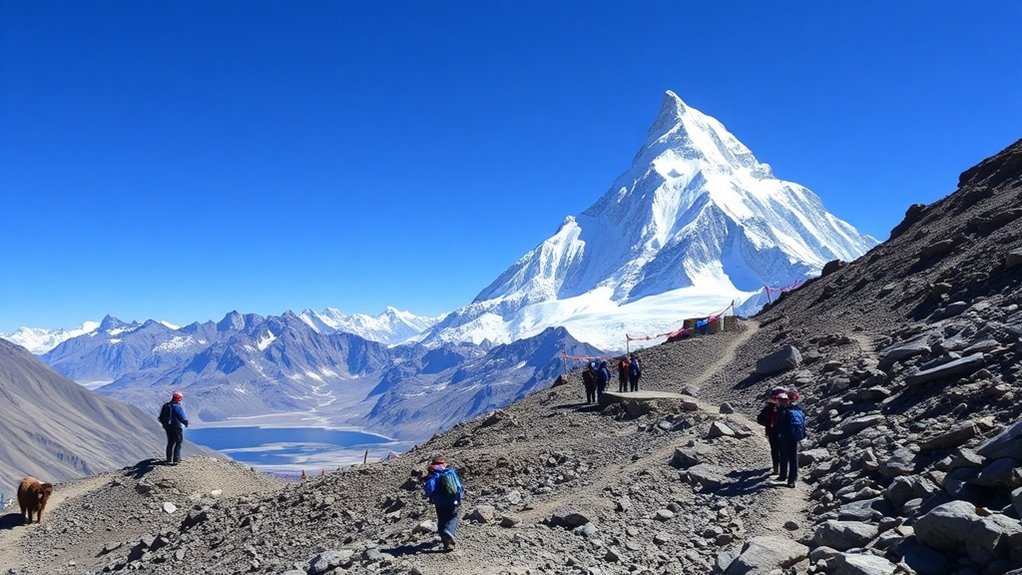
With your body ready and your mind centered, the next step is to choose the path that will carry you to Kailash Parvat. Each route offers a unique blend of challenge and spiritual depth, guiding you through sacred landscapes and ancient cultures.
| Route Name | Starting Point | Highlights |
|---|---|---|
| Lipu Lekh Pass | India (Uttarakhand) | Scenic forests, Tibetan villages |
| Nathu La Pass | India (Sikkim) | High mountain passes, serene lakes |
| Darchen Route | Tibet (China) | Pilgrimage base, panoramic views |
Prepare for rugged terrain, shifting weather, and moments of profound reflection as you step closer to this sacred mountain’s heart.
Where to Find Accommodation and Support During the Kailash Circuit
Though the journey around Kailash Parvat tests your endurance, you’ll find pockets of comfort and support along the way that ease both body and spirit. Small guesthouses and teahouses dot key stops like Darchen and Zuthulphuk, offering simple meals and warm shelter. Local families often extend heartfelt hospitality, making you feel part of their community. Along the route, friendly guides and porters provide invaluable assistance, carrying supplies and sharing stories that enrich your trek. At rest points, you can replenish water and stock up on essentials, ensuring you stay energized. Though accommodations are basic, the serene surroundings and genuine kindness create a nurturing atmosphere that helps you recharge, preparing you to continue your sacred circuit with renewed strength and quiet reflection. Additionally, embracing a growth mindset during your journey can transform challenges into rewarding experiences.
How to Respect Local Customs and Sacred Sites at Kailash Parvat
As you approach Kailash Parvat, take a moment to honor the local traditions that shape this sacred place. Dress modestly, choosing attire that shows respect and blends with the spiritual atmosphere. When visiting sacred sites, move with quiet reverence and follow the customs that preserve their sanctity. Being aware of cultural norms can enhance your experience and foster deeper connections with the local community.
Understanding Local Traditions
Respecting local customs at Kailash Parvat means embracing the deep spiritual significance the site holds for many pilgrims. When you arrive, notice the gentle hum of prayers and the rhythmic turning of prayer wheels—these aren’t just rituals but expressions of devotion woven into daily life here. You’ll see locals offering incense and flowers; joining in respectfully connects you to their reverence. Speak softly and move with intention, as the mountain’s silence is sacred. Understanding that certain areas are off-limits or approached with specific gestures helps you honor the sanctity. When elders bless travelers, accept humbly—it’s a gesture filled with goodwill. By immersing yourself in these traditions, you don’t just observe; you become part of Kailash’s living spiritual tapestry.
Proper Attire Guidelines
Embracing the local traditions at Kailash Parvat naturally extends to how you present yourself through your attire. Wearing respectful clothing not only honors the sacredness of the site but also connects you deeply with its spiritual essence. As you prepare, consider these guidelines:
- Choose modest clothing: Cover your shoulders and knees to show reverence and respect local sensibilities.
- Opt for natural fabrics: Cotton or wool blends keep you comfortable in changing mountain climates while aligning with simplicity valued here.
- Wear subdued colors: Earthy tones like browns, greens, and blues blend harmoniously with the landscape and avoid drawing undue attention.
Dressing thoughtfully allows you to feel part of the environment’s sacred rhythm, fostering humility and mindfulness throughout your journey.
Sacred Site Etiquette
When you step onto the sacred grounds of Kailash Parvat, you enter a domain where every gesture and word carries deep significance. Show respect by speaking softly and moving with intention, mindful of the sacred atmosphere. Remove your shoes before entering temples and sacred spaces, honoring local traditions. Avoid pointing your feet toward shrines or monks, as it’s considered disrespectful. When photographing, always ask for permission and refrain from capturing rituals or people without consent. Offer prayers or donations humbly, without drawing attention to yourself. Dress modestly, covering shoulders and knees, blending reverence with practicality. Observe silence during ceremonies and allow space for locals to practice their faith uninterrupted. By embracing these customs, you deepen your connection to Kailash Parvat’s spiritual essence.
Recommended Spiritual Practices to Perform at Kailash Parvat
Although Kailash Parvat is revered as a sacred peak, it’s the spiritual practices you engage in there that truly deepen your connection to its divine energy. As you stand before this majestic mountain, let your heart open through rituals that honor its sanctity.
- Circumambulate the mountain clockwise, chanting mantras like “Om Mani Padme Hum,” allowing each step to ground your intention.
- Meditate by the serene Lake Manasarovar, absorbing the stillness and reflecting on your spiritual path.
- Offer prayers with flowers and incense at designated altars, inviting blessings and purification. Practicing mindfulness techniques can enhance your spiritual experience, allowing you to fully immerse in the sacredness of the moment.
How to Stay Safe and Healthy on Your Kailash Parvat Pilgrimage
To fully absorb the spiritual energy of Kailash Parvat, you’ll need to care for your body and mind along the way. Begin by acclimating slowly to the high altitude to avoid sickness. Hydrate often and eat nourishing, light meals to keep your energy steady. Dress in layers—the mountain climate can shift quickly from sunlit warmth to biting cold. Protect yourself from the sun with a hat and sunscreen, especially at higher elevations. Listen to your body; rest when needed and avoid overexertion. Carry a basic first-aid kit and any personal medications. Stay connected with fellow pilgrims or guides—they’re your support system in this remote terrain. By honoring your physical limits, you open yourself fully to the profound spiritual transformation Kailash promises. Incorporating mindful breathing techniques during your journey can also help manage stress and enhance your overall experience.
Frequently Asked Questions
What Is the Best Time of Day to Start the Kailash Parvat Trek?
You should start your Kailash Parvat trek early morning, just as dawn breaks. The air feels crisp, the path quieter, and the soft light guides your steps, making the journey both peaceful and profoundly inspiring.
Are There Any Specific Foods to Avoid Before the Pilgrimage?
You shouldn’t feast on heavy, greasy foods or anything too spicy; they’re like storms in your stomach that could cloud your clarity. Stick to light, simple meals—fresh fruits, nuts, and grains—to keep your body steady and clear.
Can Children or Elderly People Undertake the Kailash Parvat Pilgrimage?
You can take children or elderly people on the pilgrimage, but you’ll need to prepare carefully. The journey’s physically demanding, so make sure they’re fit, acclimatize well, and carry necessary medical supplies to keep them safe and comfortable.
What Kind of Wildlife Might Pilgrims Encounter on the Trek?
You’ll spot elusive snow leopards, nature’s silent guardians, and vibrant Himalayan blue sheep, symbols of resilience. Eagles soar above, reminding you to rise above challenges, while yaks humbly trek alongside, embodying strength and endurance on your path.
How Do Local Communities Support Pilgrims During the Journey?
You’ll find local communities warmly welcoming you, offering food, shelter, and guidance. They share stories, provide essential supplies, and create a supportive atmosphere, making your journey feel connected, safe, and deeply meaningful amidst the rugged terrain.